

Urban farming education rooted in science, community, and practical growing.
The people and purpose behind Greentopia.
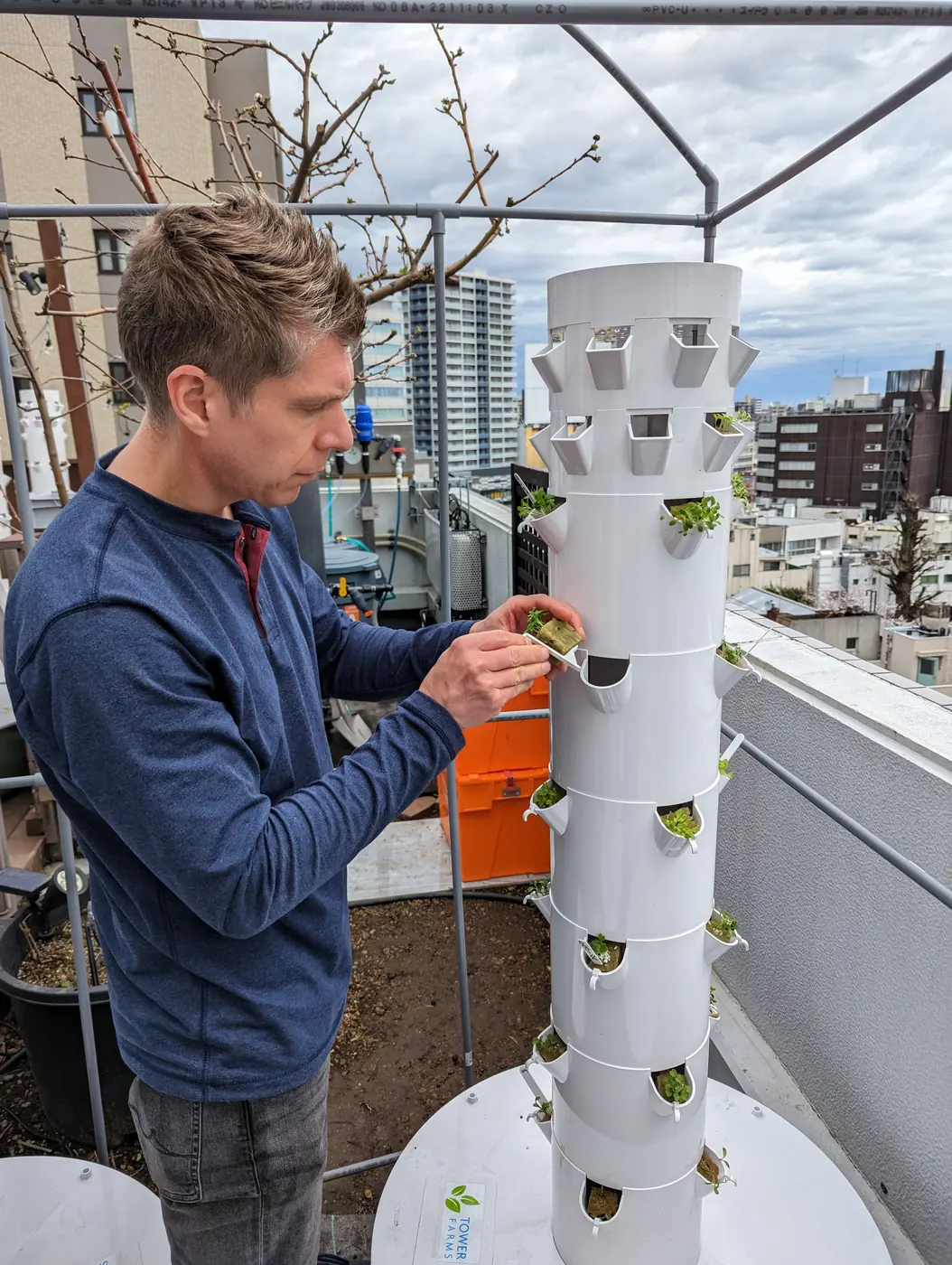
Mission
Greentopia exists to make urban farming accessible, educational, and community-driven. We believe fresh food should be grown close to where it is eaten, that kids learn best with their hands in the work, and that a single tower farm in a shared space can change how people think about food, sustainability, and each other.
Founder story
Richard Mayus is a Tokyo-based educator and entrepreneur with a background in mathematics and finance from MIT. After a career in the financial sector, he turned his focus to urban agriculture as a way to address challenges in food access, sustainability, and education. Richard founded Greentopia to bring that thinking into schools, homes, and shared spaces across Tokyo. What started with a homemade hydroponic system at home has grown into a network of education programs, community installations, and organizational partnerships. He leads program design and instruction alongside co-educator Brian Lunn, working directly with students, teachers, and partners every week.
Team
- Richard Mayus — Founder and Lead Educator
- Emiko Hirayama — Community Manager
- Brian Lunn — Co-Lead Educator
- Nick Starrett — Educator and Farm Management
- Matt Peterson — Educator and Collaborator
Schools and partners
We've worked with international schools across Tokyo, including St. Mary's International School, Seisen International School, International School of the Sacred Heart, The British School in Tokyo, United School of Tokyo, Tokyo International School, Phoenix House International, and others. We also partner with coworking spaces, community organizations, and local businesses.
Testimonials
- “The kids talk about hydroponics at dinner now.”
- “My daughter eats up all of her salad and asks for more!”
- “I never thought my two boys would fight over kale, but here we are.”
- “When my daughter brought home her DIY project from Green STEM Club, I thought it was silly, but four months later, we are still getting fresh basil from it. Amazing.”
FAQ
What programs do you offer?
We offer integrated curriculum programs (embedded in school science units), after-school clubs at partner schools (Green Explorers for Pre-K/K, Green STEM Club for K–4, and Green STEM Studio for advanced students), Greentopia Labs (our own after-school program at J's International School), seasonal camps, and workshops for families, communities, and corporate teams.
What ages do you teach?
Most programs serve Pre-K through Grade 6. We also design content for students up to Grade 13 and offer family workshops for all ages.
Do students need prior experience?
None at all. Every program starts from the basics. Returning students go deeper with more advanced experiments and independent projects.
Can you align with our school's curriculum?
Yes — that is how we prefer to work. We meet with your curriculum coordinator before the program starts and map our content to your existing units, whether IPC, NGSS, FOSS, or another framework.
What do students take home?
Depending on the program, students may bring home fresh harvested greens, a microgreens growing kit, or a small DIY hydroponic system they built themselves.
What is hydroponics?
Hydroponics is a method of growing plants without soil, using nutrient-rich water instead. The plants grow in net pots or growing media while their roots receive water, nutrients, and oxygen directly. It uses significantly less water than traditional farming and can be done indoors or outdoors, year-round.
What can you grow?
Leafy greens (all lettuce varieties, kale, chard, spinach, mizuna), herbs (basil, mint, dill, shiso, coriander), edible flowers, strawberries, tomatoes, cucumbers, peppers, and more. Leafy greens and herbs grow fastest and are the easiest starting point. See the full list of varieties.
Is hydroponic food safe to eat?
Yes. Our systems are food-grade, BPA-free, and pesticide-free. We follow strict food hygiene protocols. The produce is cleaner than most store-bought greens since it never touches soil and is harvested moments before eating.
How much water does it use?
Hydroponic systems use up to 90% less water than traditional soil farming. The water recirculates in a closed system — the only loss is through plant absorption and evaporation.
Do you need sunlight?
Natural sunlight works well for outdoor setups. For indoor growing, we use full-spectrum LED grow lights that provide the right wavelengths for plant growth. Towers can thrive in rooms with no natural light at all.
Can I lease a tower for my home?
Yes. Tower leases start from ¥11,000/month after a 3-month trial at ¥13,000/month. We deliver, set up, and walk you through everything. At the end of your lease you can renew or return the tower.
Do you install towers in offices and shared spaces?
Yes. We work with coworking spaces, offices, residential buildings, and community centers. Every project starts with a free site assessment.
What does a maintenance contract include?
Regular visits (weekly to monthly, depending on your needs) to monitor plant health, top up nutrients, swap crops, clean components, and troubleshoot any issues. The tower systems run automatically between visits.
Do you offer consulting?
Yes. We consult on hydroponic system design, urban farming strategy, food education programming, and sustainability planning. If you are exploring urban agriculture and need guidance before committing to hardware, we can help.
Can you run a workshop for our group?
Yes. We offer private workshops for families, corporate teams, community groups, and school events. Contact us with your group size and goals and we will propose a format.
My plants are wilting — what should I do?
Check the water level in the reservoir first. If the pump is running but the reservoir is low, the roots may not be getting enough water. Top up with nutrient water and check again in a few hours. If the reservoir is full, check whether the pump is running — you should hear a gentle hum and see water flowing.
The leaves are turning yellow. Is something wrong?
Yellow leaves usually indicate a nutrient issue. Check that you have added both A and B nutrient solutions and that the pH is between 5.5 and 6.5. If the pH is too high or too low, nutrients cannot be absorbed even if they are present in the water.
I see small bugs on my plants. What should I do?
Small flying insects near the base are often fungus gnats, which thrive in damp conditions. Let the growing media dry slightly between watering cycles. For aphids or other pests on leaves, a gentle spray of water or a diluted neem oil solution usually resolves the issue. Contact us if the problem persists.
The pump is not working. What should I check?
Make sure the timer is set correctly and the power connection is secure. If the timer is on but the pump is silent, check for blockages in the pump intake. Unplug the pump, remove it from the reservoir, clear any debris, and reconnect. If it still does not run, contact us for a replacement.
How often should I change the water?
We recommend a full water change every 2–3 weeks. Between changes, simply top up the reservoir with fresh nutrient water as the level drops. A full change prevents nutrient salt buildup and keeps the system running cleanly.
How do I order seedlings?
Use our online seedling order form. Choose from our current selection of lettuces, herbs, greens, edible flowers, and vegetables. We deliver seedlings ready to transplant into your tower.
How much do seedlings cost?
Seedlings are ¥200–300 per rockwool cube (one planting port), depending on variety. Each cube usually holds 2–4 plants. Order as many or as few as you need, anytime.
Can I grow from my own seeds?
Yes. You can germinate seeds in rockwool cubes or another growing medium and transplant them into your tower once they have developed roots. We include germination guidance with our Starter Kit, or you can ask us for tips.
What grows best for beginners?
Lettuce varieties (butter, romaine, red leaf) and herbs like basil and mint are the easiest to start with. They germinate quickly, grow fast, and are very forgiving. Once you are comfortable, try kale, chard, shiso, or edible flowers.
How long until I can harvest?
Most leafy greens are ready to harvest 4–6 weeks after transplanting seedlings into the tower. Herbs take slightly longer. You can harvest outer leaves as needed and the plant will keep producing for weeks.